Staying Warm Inside: Rituals for Rest, Resilience, and Winter Vitality
Simple, soulful ways to nourish your inner spark through the stillness of winte
This is part 2 of our 5-part Winter Health Series.
(We recommend starting with the Five Elements Series for deeper context if you haven't yet.)
Winter in Traditional Chinese Medicine: The Still Season and the Wisdom of Rest
Staying Warm Inside: Rituals for Rest, Resilience, and Winter Vitality (You are here)
Cycles, Seasons, and Slowing Down: Fertility, Menopause, and the Winter Body
Facing Fear, Remembering Trust: Emotional Health in the Water Season
In the Winter Kitchen: Slow Food and the Strength Beneath Stillness
Winter is a season of stillness, but that doesn’t mean your inner fire has to fade. In Part 2 of our Winter Health series, we explore how Traditional Chinese Medicine invites us to stay warm from the inside out. Learn about the importance of warmth, rest, and rituals that support your energy without depletion, plus how to soak like a snow monkey (yes, really).
Tending the Inner Fire
In Traditional Chinese Medicine (TCM), winter belongs to the Water element, but that doesn’t mean we abandon Fire altogether. Deep within Water lies a spark that must be protected. This spark, our warmth, our will, our zest for life, needs gentleness in winter, not gasoline.
Think of your energy like a hearth fire. You wouldn’t fling open the doors in a blizzard or turn it into a bonfire. Instead, you insulate, you feed it slowly, and you sit close with care.
Our culture often mistakes warmth for speed. But in winter, real warmth comes from deep within:
from your digestion, not your to-do list
from presence, not productivity
from time spent soaking, sipping, resting, and reflecting
It is the deep generator of energy that comes from stored fuel and nourishment, and Fire, in this context, is what ignites stillness into quiet determination.
Soak Like a Snow Monkey
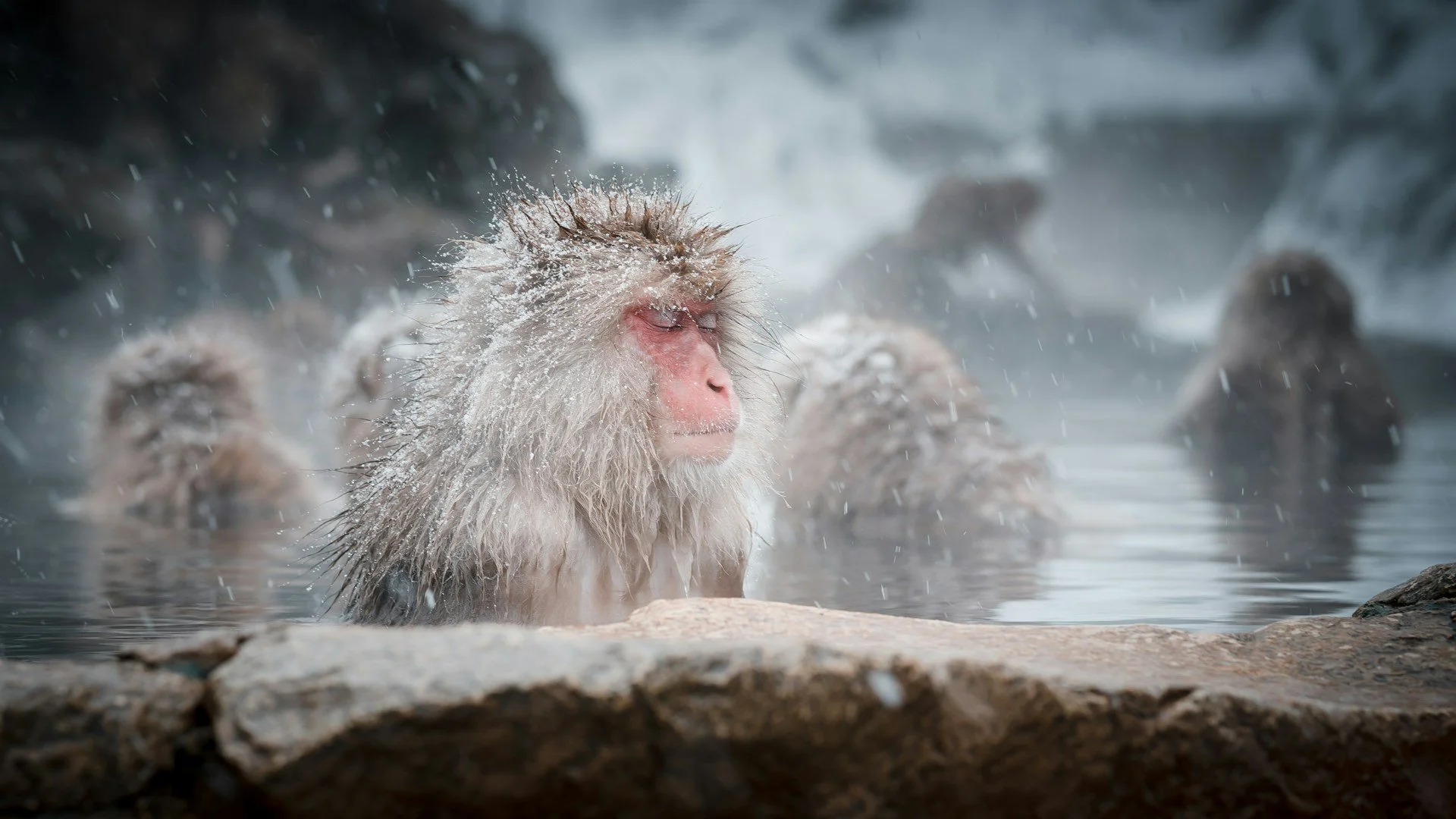
The image above shows the famous Japanese macaques lounging in steaming hot springs like retired spa queens. They know a thing or two about winter survival. And don’t worry, they don’t get cold or frozen! Their thick outer coats repel water, while a dense underlayer traps warmth close to the body.
Anyways.
You don’t need a natural hot spring to follow suit. A warm bath, even just waist-deep can have profound effects on circulation, mood, immunity, and sleep quality. In TCM, warmth applied to the lower body helps protect the Kidneys, the energetic root of vitality associated with the Water Element. The lower belly and mid-to-low back are areas we fiercely guard in winter, and soaking helps them soften and strengthen.
If you’re inviting new life into your womb, or simply tending to the source of your vitality, a cozy, warm environment is key.
You can enjoy:
Evening baths or Sitz baths with ginger or Epsom salts
Bath teas with warming herbs like cinnamon, mugwort, or orange peel
A hot water bottle over the lower abdomen or sacrum before bed
Socks that cover at least four inches above the ankle (yes, this matters!)
Wrap up after. Keep that heat in. You are, after all, a precious ecosystem, not a furnace.
No time for a bath? No bathtub at home?
Do a foot soak instead. All you need is a basin or bucket tall enough to hold water above your ankles, ideally 10 inches for 10–15 minutes. Keep a kettle or thermos of hot water nearby to top it up as it cools. You can soak in plain water, or add Epsom salts or warming herbs (best to consult a Chinese Medicine practitioner before using herbs regularly).
Soak your feet, sip some tea, chat with a friend, or cuddle a cat. Nothing can be better than that!
Let it be simple and warm.
Rituals That Warm Without Depleting
Not all heat is helpful. Coffee is warm but drying. It can agitate the nervous system and feed anxiety. Overexertion gets you sweaty, but often leaves you spent.
Here are ways to build warmth that nourishes rather than drains:
Drink warm liquids throughout the day. Broths, spiced teas, and warm lemon water are better choices than cold smoothies or iced coffee.
Layer from the core out. Socks, slippers, scarves, and tucked-in shirts, your grandma was onto something.
Stretch gently and often. Especially around the hips and spine. Keep energy flowing without force.
Eat warm, slow-cooked foods. Soups, stews, roasted root vegetables, and congee are winter allies. (More on this in Part 5.)
Try warm oil massage. Sesame or ginger oil rubbed onto the feet, low back, or belly can soothe and ground the nervous system.
Consider moxibustion. This herbal heat therapy, often using dried mugwort, is a traditional way to warm and tonify the body. It’s best learned from a Chinese Medicine practitioner to ensure safety and correct use.
Protecting Your Warmth: Gentle Boundaries for a Demanding Season
Winter is a cold season, so we invite warmth.
One of the most supportive things you can do in winter is stay warm, inside and out. In TCM, cold constricts, drains, and slows the movement of Qi and Blood. Warmth softens and nourishes. While cold exposure has become trendy in some circles, TCM generally encourages protecting your core energy during the colder months.
In the winter, it’s best to minimize or avoid:
Swimming in cold water
Cold plunges or icy showers
Spending prolonged time outdoors, especially in wind
Exposing the low back and knees to cold air
Eating cold or raw foods (think salads, smoothies, iced drinks)
Draining activities like high-impact workouts or long-distance running
Of course, this isn’t one-size-fits-all. Some people can tolerate a bit more cold or exertion than others. The key is listening to your own body. If you're already feeling depleted or chilled, less really is more.
Inviting warmth isn’t just about temperature, it’s about nourishment. Warm socks, warm meals, warm hands on the belly or low back just we discussed above. These are the rituals of replenishment.
Rest Is an Active Practice
Don’t underestimate the vitality that grows quietly in rest. Each time you say no to another errand, each time you choose early bedtime over late-night scrolling, you’re building something:
Your immunity.
Your future energy.
Your menstrual health.
Your mental and emotional peace.
Your ability to age slowly and naturally (because let’s be honest, "anti-aging" in this fast-paced world is a bit of a reach. Let’s aim for graceful slow-aging. Not for time travel).
TCM teaches that the body stores its Essence in the winter. This Essence is a foundational energy linked to fertility, longevity, and resilience. Every time you let yourself settle, you’re feeding the roots of springtime growth.
(New to the concept of Essence? You might enjoy this short guide on how Essence works in TCM, and why it matters most in winter).
Feeling tired doesn’t mean you’re broken. It means you’re responding appropriately to the season, or that this is your true state masked by adrenaline high.
In Part 3 of our Winter Health series, we’ll explore what winter means for fertility, menopause, and how to support the reproductive body across all stages and identities. Curious about how seasons impact hormones?
Part 3: Cycles, Seasons, and Slowing Down: Fertility, Menopause, and the Winter Body